
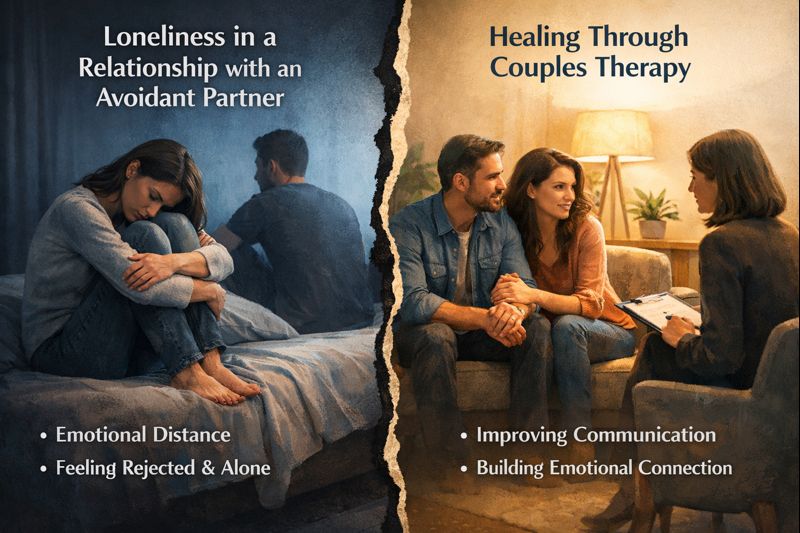
When Loneliness Creeps Into Love: Understanding Avoidant Partners and How Couples Therapy Helps
Relationships are meant to be a source of comfort and connection. But for many people, emotional loneliness can emerge even when you’re with someone you love deeply. One common reason for this sense of isolation is an avoidant attachment style in a partner. Understanding how this pattern works and why couples therapy can be effective is critical for anyone feeling emotionally distant in their relationship.
What Is Avoidant Attachment?
Avoidant attachment is one of the primary adult attachment styles identified in psychological research. It develops from early relational experiences, often when caregivers were emotionally unavailable or inconsistent. Over time, people with avoidant attachment learn to value independence and self-reliance and may come to see intimate emotional closeness as overwhelming or unsafe. This pattern continues into adulthood and can show up in romantic relationships as emotional withdrawal, discomfort with vulnerability, or resistance to deep connection.
Avoidant partners are not necessarily uninterested in love, but they may struggle to express needs and emotions and can pull back when relationships feel too close. This creates a push-pull dynamic with their partner that often feels lonely and confusing, especially if the other partner desires closeness more intensely.
How Avoidance Leads to Loneliness
In many avoidant scenarios, one partner may feel constantly misunderstood, unheard, or shut out. This loneliness does not stem from a lack of love but from unmet emotional needs and conflicting relationship rhythms. For example:
-
The avoidant partner withdraws when intimacy increases, creating emotional distance.
-
The other partner may react with pursuit or reassurance seeking, which triggers even more withdrawal.
-
A cycle begins where neither partner’s needs are effectively met, making connection feel unattainable.
This pattern is a classic example of the “anxious-avoidant dance,” where one partner’s need for reassurance amplifies the other’s instinct to pull away. Over time, this dynamic can fuel chronic loneliness, frustration, and reduced relationship satisfaction.
Why Couples Therapy Matters
Feeling lonely in a relationship is not a sign of personal failure. Often, it reflects unconscious relational patterns and attachment histories that both partners bring into the relationship. Couples therapy can intervene in this cycle by creating a structured environment where these patterns can be safely explored and changed.
Here are several ways therapy helps:
1. Amplifying Awareness of Attachment Styles
Therapists trained in attachment work help couples understand how each partner’s history shapes their responses today. Knowing that avoidance is not about rejection but an internal protective mechanism can reduce blame and open space for empathy.
2. Breaking Negative Interaction Cycles
A central aim of therapy is to identify and interrupt the repetitive pull-away/pursue cycles. When partners learn what triggers emotional withdrawal and escalation, they can begin to respond differently rather than react automatically.
3. Building Emotional Safety
Many avoidant partners struggle because vulnerability feels unsafe. Therapy provides a step-by-step process to build trust, so emotional expression becomes less threatening. Over time, this helps partners feel more connected rather than isolated.
4. Promoting Secure Bonding
Evidence supports the effectiveness of attachment-focused approaches — such as Emotionally Focused Therapy — in strengthening relationships and improving secure bonding. Research shows significant improvements in emotional connection and relationship satisfaction for couples who engage in attachment-based therapy.
What to Expect in Therapy
Couples therapy is not a quick fix, but it is a practical path forward for many relationships struggling with avoidance and loneliness. Most therapeutic work begins with:
-
Assessment of interaction patterns and emotional triggers
-
Reflection on each partner’s attachment history
-
Practice in expressing needs and hurt feelings safely
-
Gradual exposure to emotional vulnerability without overwhelm
For some couples, individual therapy alongside couples therapy can support deeper personal insight that enhances joint progress.
Is It Worth It?
The journey through couples therapy demands honesty, patience, and willingness from both partners. But for couples feeling stuck in a lonely pattern of emotional withdrawal and disconnection, it provides a validated path toward greater understanding, less isolation, and more fulfilling connection. With the right support, partners can move toward a more secure relational bond where closeness feels safe and loneliness less frequent.